


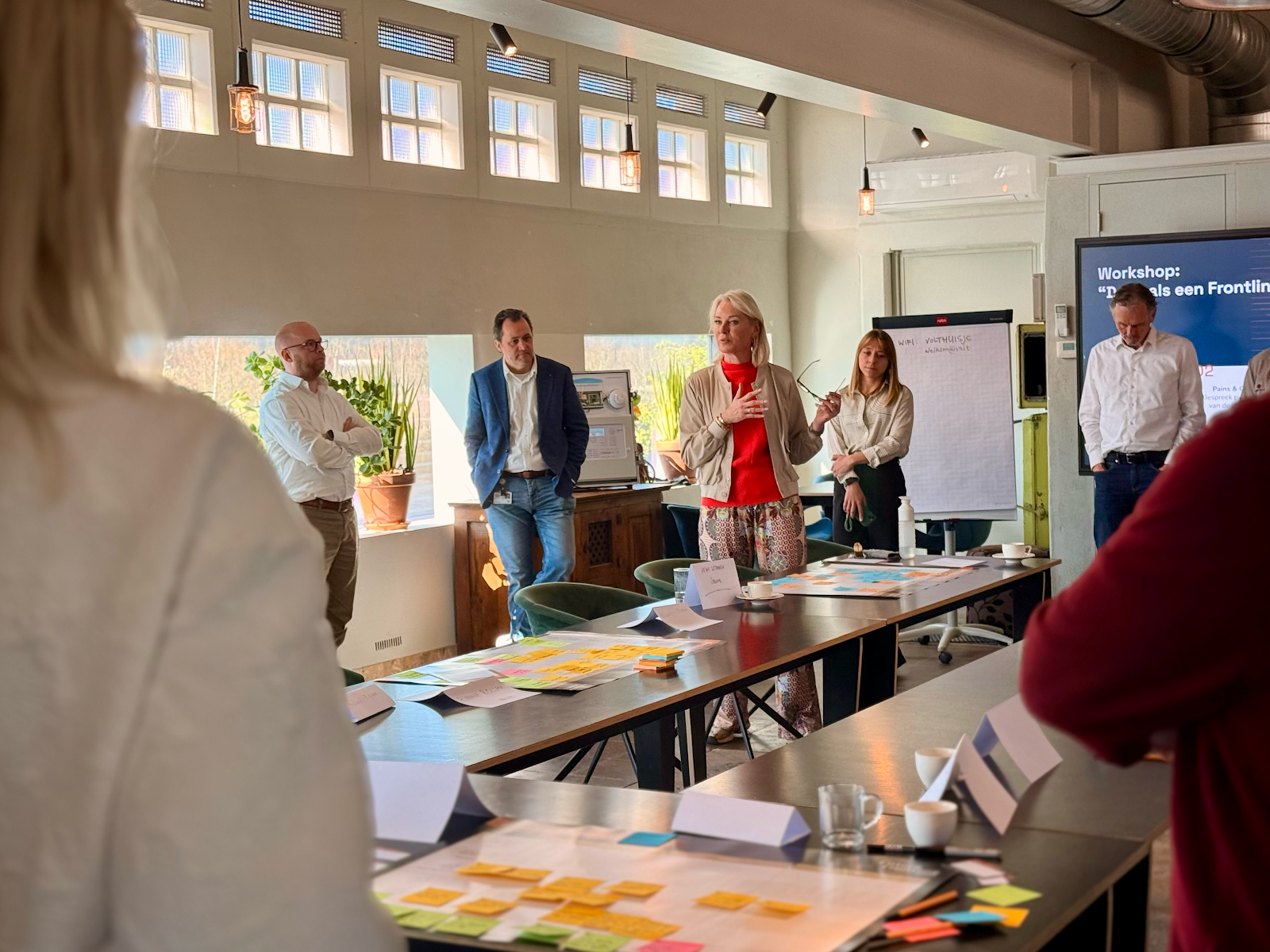
In mid-March, we gathered 16 leaders from various technical service sectors: IT Directors, CDOs, and innovation leaders from installation companies, inspection bodies, maintenance companies, and specialist providers in the fields of power supply and air technology. Under the banner of Future Frontline, we dedicated a morning session to the question of how to make digital innovation and technology work for the frontline professional, rather than the other way around.
As a strategic digital agency in the technical services market, we assist organisations with digital business strategy, product vision, design, and development. We combine business goals, end-user needs, technology, and data in a concrete, actionable way to create digital tools for professionals. Through Future Frontline, we share our knowledge and bring peers together to learn from one another, share challenges, and seize opportunities.
The Challenges in the Market
There are plenty of opportunities to advance this sector with digital innovations. However, as the participants' experiences this morning revealed, this is not always an easy task.
Remmert Stipdonk, founder and digital business strategist at fresk.digital, painted a similar picture when opening the Future Frontline session. Last year, for example, 68% of technical companies in the Netherlands struggled with staff shortages. To make that challenge more complex, 41% of crucial practical knowledge resides with employees due to retire within 5 years. More than a third of organisations in this market admit to being insufficiently prepared for this. Labour productivity would need to increase by 50% to absorb this impact. Yet, that productivity did not rise last year; it actually saw a slight decrease, despite promises from initiatives such as ‘Industry 4.0’.
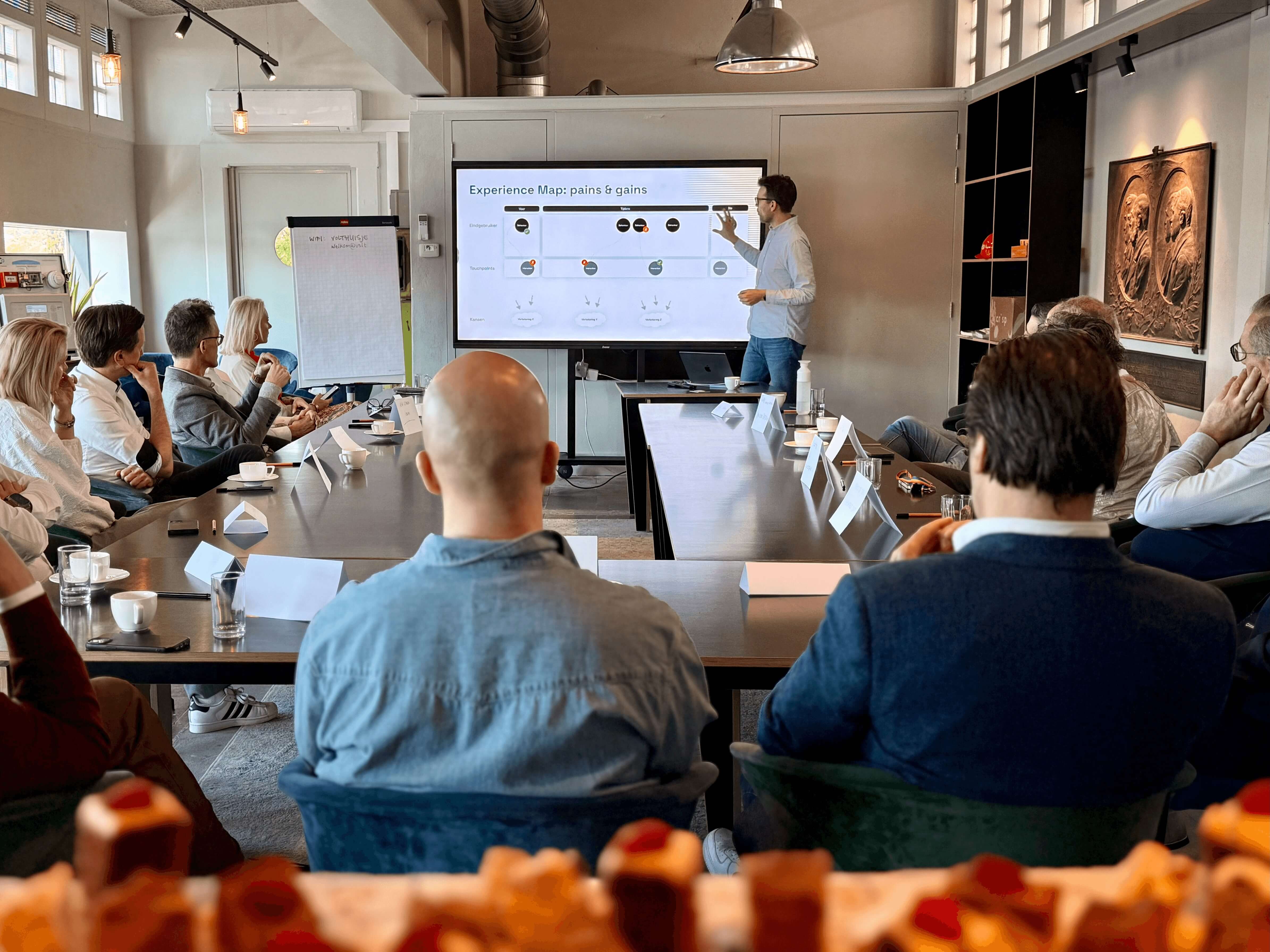
Research shows that 93% of companies are actually unsure how best to use AI and digitisation to become more productive. This is quite understandable: “Innovating in an environment that is so strongly operations-driven, often with a relatively large field service workforce, thin margins, or stringent regulations, requires a focused approach,” Remmert explained. He highlighted four challenges we encounter across the sector:
- The Knowledge and Talent Crisis: When experienced staff leave, their expertise and experience vanish. New talent is not entering the pipeline fast enough, leading to errors and operational risks.1
- The Efficiency Gap: Very few digital systems genuinely align with the day-to-day reality of frontline professionals. This increases the administrative burden, creates inefficiencies, and makes ‘shadow IT’ a necessary workaround to get the job done at all.
- The Adoption Problem: Implementation does not equate to usage. When tools do not fit in with daily work, workarounds emerge. If adoption lags behind, the promised value is never realised, and digital investments yield insufficient returns.
- The Data-Driven Future: Valuable operational data often remains untapped because it is fragmented or incomplete in its capture. Without context and reliable data from the frontline, opportunities for AI and process optimisation are missed.
The human centred approach in practice
In his introduction, Remmert shared his vision on a human-centric approach that puts end-users, the target group fresk.digital refers to as ‘frontline professionals’ in this context, at the centre. He argues that by starting with these skilled professionals on the operational frontline, one gains an understanding of where the pain points truly lie within the organisation.
Martijn Bohnen, Software Product Manager at Hertek, then used a current practical example to explain how they developed the new Hertek Connect Portal. From strategy to design through to the platform’s development, he demonstrated the importance of defining goals, creating a complete overview of touchpoints and processes, and continuously involving stakeholders (colleagues, partners, clients) in this process
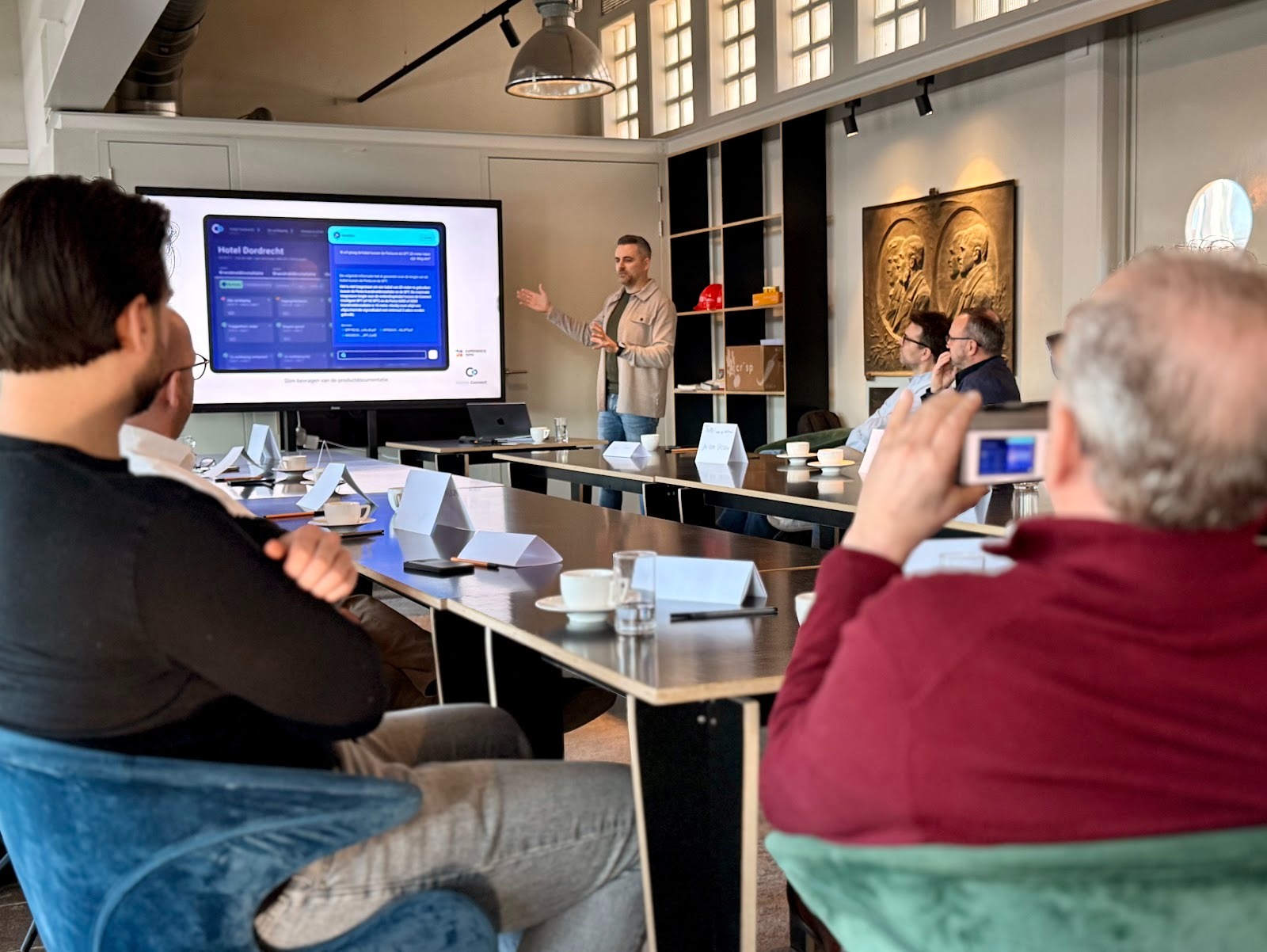
There was significant recognition among the participants, ranging from the operational complexity evident in the ‘spaghetti diagram’ featuring dozens of journeys and just as many touchpoints, to the observations and anecdotes shared from end-user interviews.
Martijn showed how Hertek succeeded in translating this complexity into an intuitive user interface. Following a number of sneak-preview screens (the official presentation of the new Hertek Connect Portal is scheduled a month after the Future Frontline session during the FireSafety & Security conference), there was ample time for questions and sharing experiences.
Workshop: ‘Think Like a Frontline Professional’
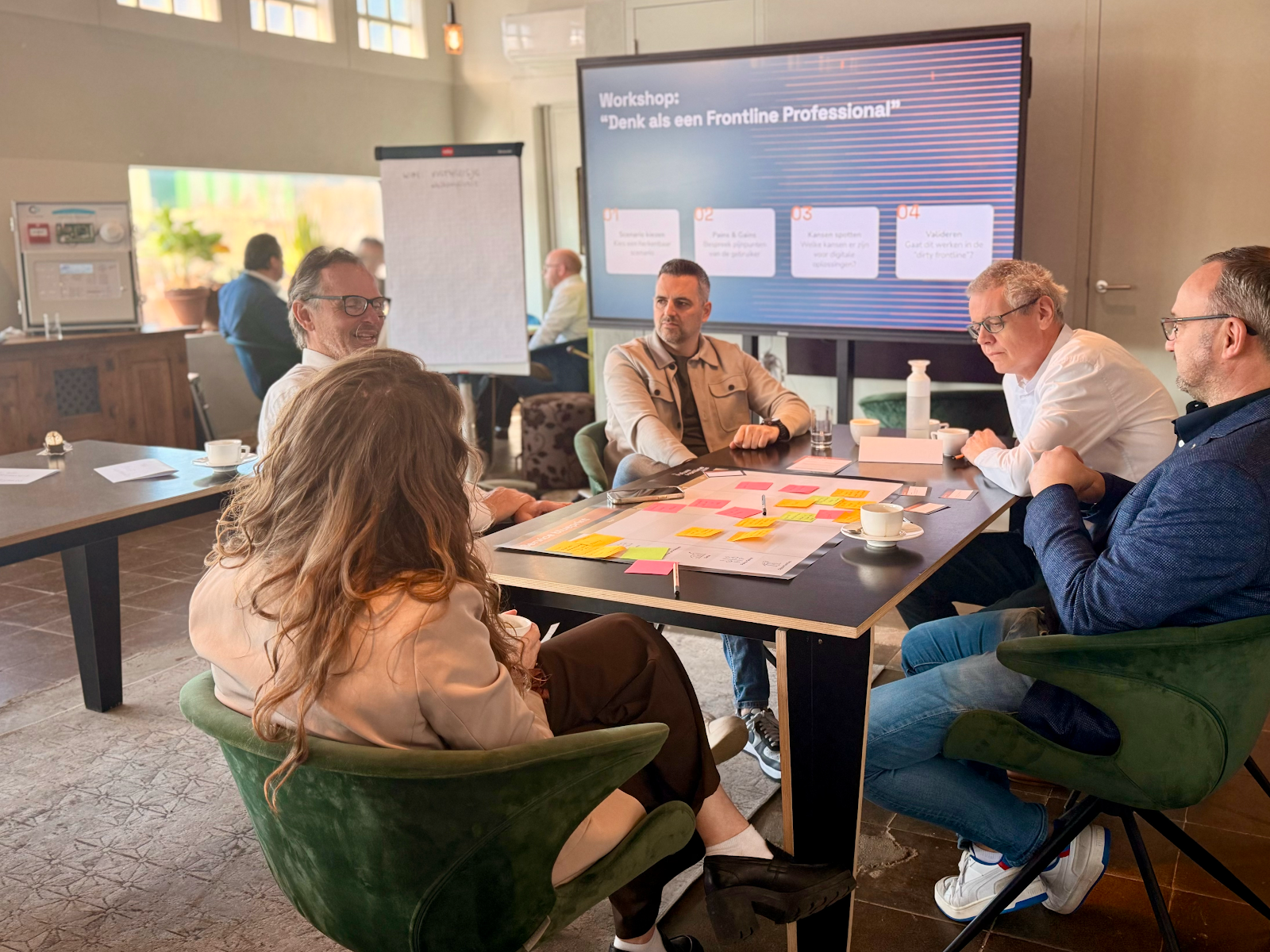
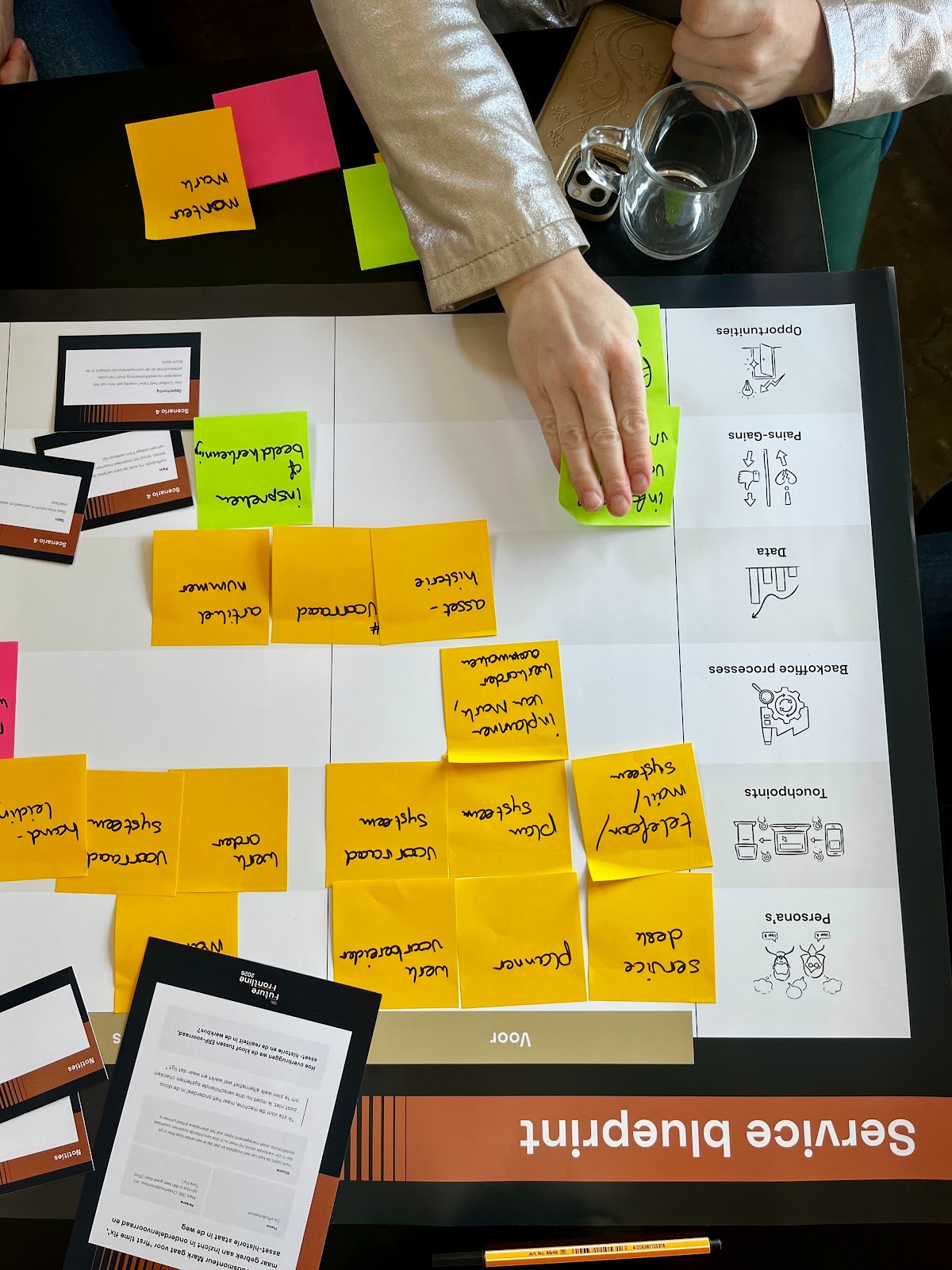
An approach that perfectly complemented the presentations by Remmert and Martijn was introduced in the second part of the morning by Virginia Rispoli. Virginia, Human Centred Designer at fresk.digital, led the ‘Think Like a Frontline Professional’ workshop. In this session, participants worked in groups of four on common scenarios encountered in day-to-day technical service operations. The objective was to empathise with a service engineer's work process and define the pains, gains, and opportunities present within it.
To facilitate this, Virginia explained the ‘Service Blueprinting’ methodology; a practice that ensures structured insight into journeys, touchpoints, processes, technologies, and data flows. This method makes interrelationships and dependencies visible, allowing bottlenecks and opportunities to be clearly defined. For many participants, this was an inspiring session, as it allowed their own processes to be thoroughly scrutinised and benchmarked against those of their peers.
The takeaways from this morning
It is clear that the diverse sectors within this industry have much in common. These include challenges related to staff shortages, ‘shadow IT’, applicable AI, and the adoption of digital tools. The Future Frontline participants engaged in a highly energetic discussion. We learned from each other's practical experiences, applications in similar processes, and various perspectives on the market.
In addition to sharing individual learnings, we discussed the morning's overall takeaways during the closing lunch. Frequently mentioned points were:
The Service Blueprint as a guideline:
Many parties find value in a concrete, actionable translation from documentation to practice. Mapping out the entire chain, from action in the field to touchpoints in the back office, provides clarity. Service Blueprinting is a proven and effective method for structuring processes and making complex scenarios transparent for management.
Closing the loop:
While it is clear that a significant amount of data is already being collected and applied, the challenge lies in follow-up. How do you connect planning, inventory, execution, and automated reporting in a logical, ‘guided workflow’? Streamlining and operationalising these data flows is the next step for many organisations.
Wearables:
In addition to software, we discussed other innovations to relieve the operational burden. There are many opportunities in using wearables for purposes such as triage, global remote troubleshooting, or recording physical work performed. We discussed several applications and, in some cases, applied the Service Blueprinting exercise to them.
Self-sufficiency for field staff and end-clients
We also see a clear need to increase the self-sufficiency of both field staff and end-clients. This can be achieved through small innovations in subprocesses, but the consolidation of various touchpoints into a single self-service portal is also a current theme. Martijn’s Hertek case study provided excellent inspiration here.
Next steps
With Future Frontline, we offer leaders in technical services an opportunity to connect and learn from each other about digital business strategy, digital innovation, and AI. We are compiling the knowledge, inspiration, and insights gained into an industry report, which will provide technical service providers with the tools to truly make technology work for skilled professionals, rather than the other way around.
Want to Join Future Frontline #2?
Participants rated this first edition an 8, noting that the practical examples and the workshop session proved particularly valuable. Would you like to join the next edition? Sign up via cyrille@fresk.digital, and we will keep you informed about the second Future Frontline event.